How to Plan a Clothing Photoshoot: Studio, Phone or AI
Amazon's imaging guide for clothing keeps a list of things the main photo of an adult garment may not contain, and the ghost mannequin is on it: the invisible-body effect that Indian studios list at ₹250 to ₹800 a product. Rules like that one, more than any photographer's eye, decide what a clothing photoshoot has to deliver, so they are worth knowing before you book a studio or clear a table at home.
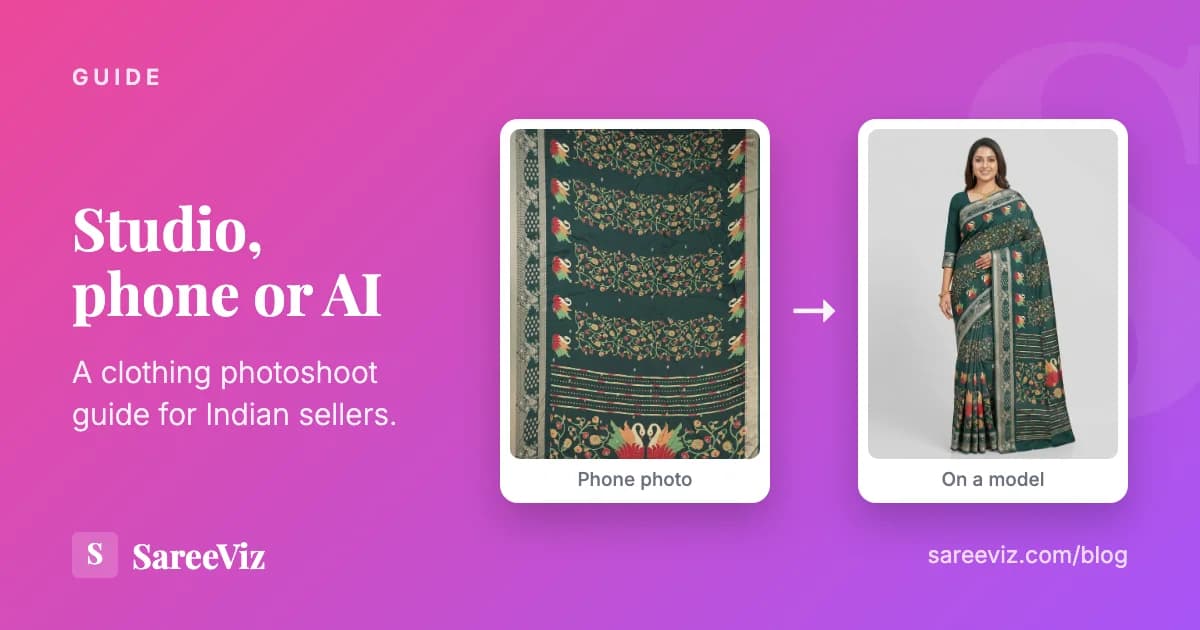
A clothing photoshoot, for an online seller, is the job of turning each design into the handful of photos a marketplace listing needs: usually a front, a side, a back and a close-up, on a clean background, at a size the platform accepts. You can get those photos three ways. A studio shoots them for you, on a model or laid flat, at anything from ₹75 a photo to ₹750 a saree on the published Indian rate cards. You shoot them yourself on a phone, which costs nothing but your afternoon and works best for flat lays. Or you photograph the garment flat on your phone and let an AI tool put it on a model. This guide covers what each route involves, what it costs, how to plan the shot list for sarees, kurtis, lehengas, suits and dresses, and what Meesho, Amazon, Myntra and Flipkart each ask of the photos.
Full disclosure before we start: SareeViz is one of those AI tools, and this is our blog. I have tried to give the studio and the phone a fair hearing, and to say plainly where AI is the wrong answer.
The four kinds of garment photography
Before you ring a studio or clear a table at home, decide what the photo has to show. Garment photography comes in four styles, and the price follows the style much more than it follows the photographer. The studio figures here are from the rate cards in our guide to product photography cost in India, where every row links to the studio's own page.
| Style | What it is | Listed price | Good for |
|---|---|---|---|
| On a model | A person wears the garment in a studio or on location. | ₹150 a photo (Kolkata) to ₹550 a product for 3 photos (Navi Mumbai); ₹750 for a saree with draping | Anything where fit and fall decide the sale: sarees, lehengas, kurtis, dresses. |
| Flat lay | The garment laid out on a surface and shot from above. | ₹300 a product for 3 photos (Navi Mumbai, 70+ products) | Showing print and colour cheaply; tees, kids’ wear, folded stock. |
| Ghost mannequin | Shot on a mannequin that is edited out, so the garment holds its shape with nobody in it. | ₹250 to ₹800 a product (Ckstudio's 2026 guide) | Western shirts, jackets and dresses with structure. Not allowed on Amazon’s main image for adult clothing. |
| AI on a model | A phone photo of the garment, turned into photos of a model wearing it. | ₹10 to ₹20 a photo by size, on SareeViz | Catalogue volume, and designs that would otherwise go up as a flat lay or not at all. |
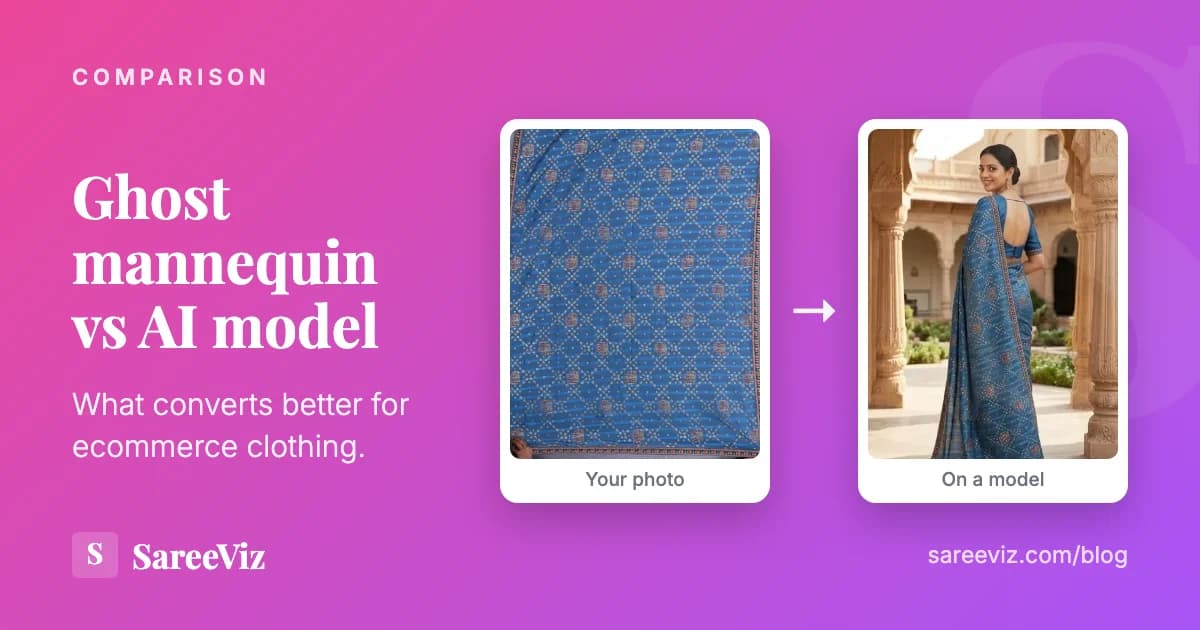
For Indian ethnic wear the choice is narrower than the table makes it look. A kurti on a hanger tells a buyer the print and roughly the cut. A saree folded on a table tells them the colour and the border and very little about how six metres of it will fall. Ghost mannequin, a staple of apparel studios, struggles with exactly the garments Indian sellers sell most, because a saree or a dupatta is all drape and a mannequin cannot drape. We set the two side by side in ghost mannequin vs AI model photography. Amazon settles part of the argument for you: besides banning visible and ghost mannequins from the main image of adult clothing, its imaging guide wants that main image to show the garment on a model.
What a clothing photoshoot costs in India
Studios charge in three units, and mixing them up is how quotes become impossible to compare. Per photo is the clearest: Ckstudio in Kolkata lists ₹75 a photo for a basic on-model shot with a minimum of five per garment, and ₹150 a photo for catalogue shots with a model and makeup, minimum three per garment. Per product bundles a fixed set: a Navi Mumbai studio lists ₹300 a product for three flat-lay photos and ₹550 for three on a model, and ₹750 for a saree, because a saree also needs makeup and somebody to drape it. Per day books the room and the crew: MangoBox in Bengaluru starts its fashion shoot day at ₹45,000 for up to about 40 edited photos, with the model and makeup extra, and Ckstudio's 2026 guide puts a Delhi model shoot day, one model and 10 to 15 outfits, at ₹35,000 to ₹85,000.
The cheap per-product rates come with fine print. The Navi Mumbai prices assume 70 or more products for flat lays, 50 or more for garments on a model and 40 or more for sarees. Bring twelve kurtis and you are under every one of those lines, which in practice means a custom quote. Tax is usually on top; the Navi Mumbai card says so, and most of the others say nothing either way, so plan for 18% GST unless the quote says it is included.
If you organise the shoot yourself and book people by the day, the model is the biggest line. Dazzlerr's 2026 guide to hiring models in India puts a beginner at ₹3,000 to ₹10,000 a day and a professional commercial model at ₹10,000 to ₹50,000, with hair and makeup at ₹2,000 to ₹20,000 a day and agency commission of 10% to 30% on top of the model's fee. The same guide says catalogue shoots are often sold at ₹400 to ₹850 per outfit with the model, studio and photographer bundled, which is a useful number to hold in your head when a quote arrives.
Planning the shoot: a shot list for each garment
The single most useful thing you can bring to a shoot is a written list of the photos you need for each design. Without one, the day goes to the hero shot of your favourite piece and the back views get forgotten until the marketplace rejects the listing. The list below is the set I would ask for. The first column is what goes in front of the camera on a model; the second is what to photograph on your phone if you are doing it yourself or feeding an AI tool, where every separate piece needs its own photo.
| Garment | Shots on a model | Phone photos of the garment |
|---|---|---|
| Saree | Full-length front drape; back view with the pallu falling; side view; close-up of the border or pallu work | The saree flat, edge to edge; the blouse piece as its own photo; the pallu or border too if it has a different design |
| Kurti or kurta set | Front; side to show length and slits; back, especially if it has work on it; close-up of the neckline or embroidery | Front flat or on a hanger; the back as a separate photo; the bottom if it is sold with the set |
| Lehenga | Full front with the skirt spread; back; choli close-up; dupatta draped or held out | The skirt; the choli and the dupatta as one photo each |
| Salwar suit | Front with the dupatta; back; close-up of the kameez yoke or embroidery | Kameez, salwar and dupatta, one photo per piece |
| Dress or men’s kurta | Front; side; back; close-up of the fabric, collar or placket | Front flat or hanging straight; the back separately if it has its own design |
Two habits save a reshoot. Keep the same model, background and framing for every design in a batch, so the catalogue looks like one shop rather than six. And shoot the back as seriously as the front. Myntra and Flipkart both require a back view, and on a saree the back is where the pallu does its work.
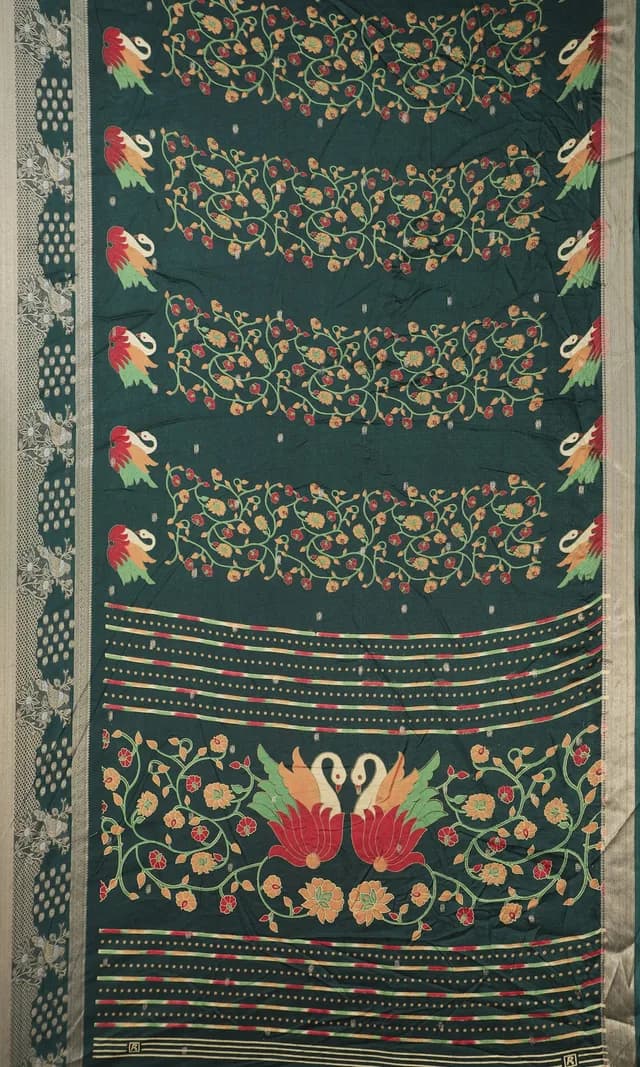
Phone photo
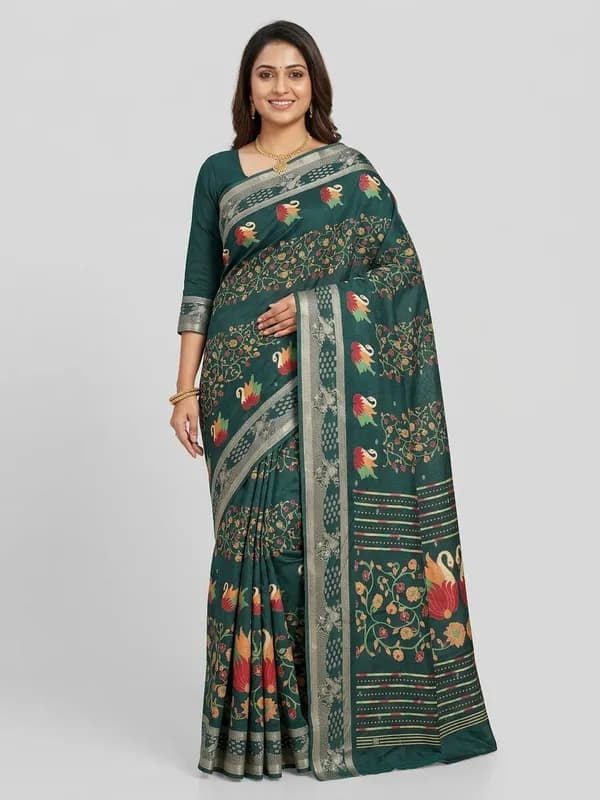
Front
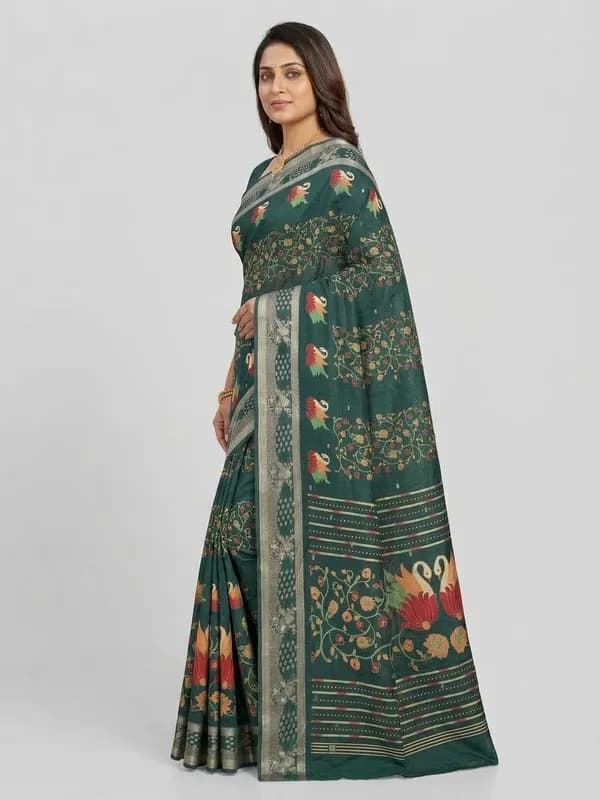
Side
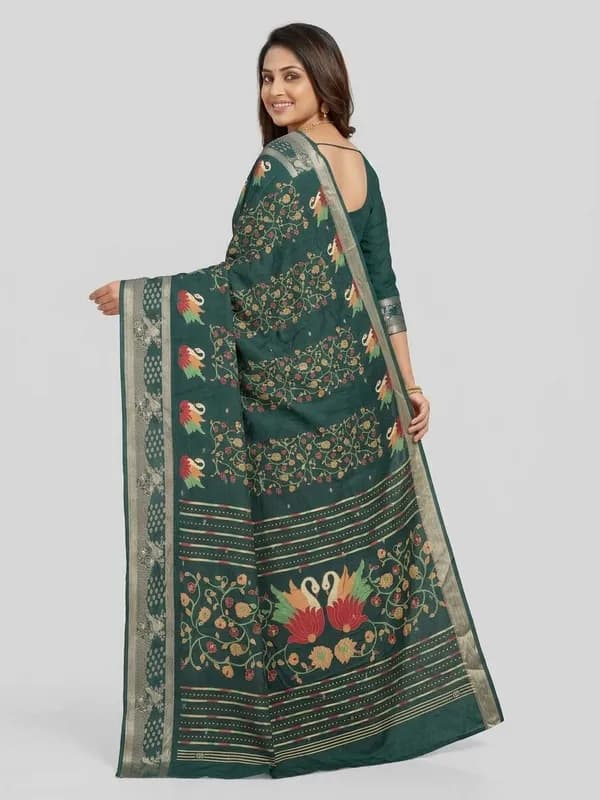
Back
Apparel photography for Meesho, Amazon, Myntra and Flipkart
Every marketplace publishes its own idea of a good clothing photo, and they disagree more than you would expect, down to the colour of the background. These are the rules as we checked them in September 2026 when we built our marketplace presets. They do change, so look again before you photograph a whole season.
| Marketplace | Photos | Views and rules | Background | Minimum size |
|---|---|---|---|---|
| Myntra | 5 to 7 | Front, side and back required; details as their own photo; hands off the product | Light grey, soft shadow | 1080 x 1440 px |
| Amazon | 5 to 7 | Front on the main image, then back and detail; adult clothing worn by a standing model on the main image | Pure white on the main image | At least 1,600 px tall |
| Flipkart | 2 minimum, 3 preferred | Front and back required, side optional | Light grey, soft shadow | 1000 x 1000 px |
| Meesho | 1 minimum, more recommended | A clear front image; JPEG; no logo or watermark | No published rule | No published rule |
Meesho is the odd one out. Its published seller guide asks for a clear front image, JPEG files and no logo or watermark, and says nothing about background, shape or pixel size; live saree listings there mix square, 4:5 and 2:3 photos. Amazon is the opposite, with a whole imaging guide for clothing: the main image on pure white (RGB 255, 255, 255), one product filling at least 85% of the frame, and a model who is standing rather than kneeling, leaning or lying down. The Meesho product photography and Amazon product photography pages set out each in full.
The practical upshot for a shoot is that a portrait photo at a generous size covers all four. Ask the studio for full-resolution files rather than web exports, and crop for each marketplace afterwards; a light grey background suits Myntra, Flipkart and Meesho, and Amazon's main image is the one that needs white.
How to do the shoot yourself on a phone
A phone will not give you a model, but it will give you a perfectly good flat lay, and it gives you the input photo that every AI tool needs. Either way the rules are the same, and most of them are about stopping the phone from inventing things.
- Steam or iron the garment first. A crease in the photo is a crease in the listing, whether the photo is the final flat lay or the input to an AI tool.
- Use daylight, and switch off every filter. Shoot near a window rather than under a tube light. A colour cast in the photo becomes a colour cast in the result, whoever or whatever turns it into a listing.
- Lay it flat or hang it straight, and shoot square-on. Stand directly above a flat lay, or level with a hanging garment. An angled shot turns a rectangle of print into a trapezium.
- Fill the frame with fabric and nothing else. No floor, bedsheet, hanger hook, hands or feet at the edges. For an AI tool this matters most of all, because it treats everything in the photo as part of the garment.
- One piece per photo. The blouse piece, the dupatta, the choli and the back of a kurti each get their own photo, cropped tight. A blouse photo that also shows the saree border gets the two designs mixed up.
- Hold the real garment next to the screen before you list. The print, the border and the colour should match what you will ship.
Our photo prep guide has the cropping step with pictures, and the saree guide shows which photo goes in which slot for the blouse, pallu and border.
Where AI fits into a clothing photoshoot
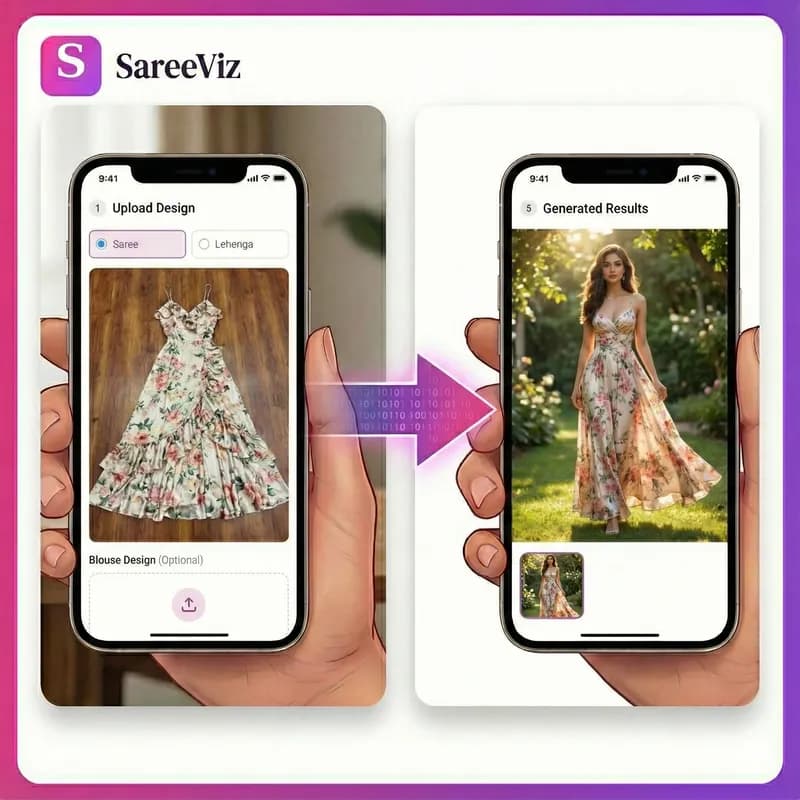
The AI route keeps the phone step and replaces the model step. You upload the phone photo of each design, pick a model, a background and the poses, and get back photos of a model wearing that garment, usually in about a minute each. On SareeViz a photo costs 1 credit at 1K, 1.5 credits at 2K and 2 credits at 4K, and the smallest pack is ₹100 for 10 credits, so a credit is ₹10 plus 18% GST. Picking a marketplace sets the poses, background and size for you: the Meesho preset makes 3 photos at 1K for 3 credits a design, Flipkart 3 at 2K for 4.5, and Myntra and Amazon 5 at 2K for 7.5.
Now the honest part. Not every result is a keeper. Across the 207,556 catalogue images in our study of how Indian sellers photograph ethnic wear, sellers kept roughly one in three, so budget three attempts for every photo you mean to list. Credits are only taken for images that generate successfully, but an image you reject still costs what it cost. You also have to check every result against the real garment, because a print that drifts or a border that changes is a return waiting to happen. On Amazon there is a paperwork step as well: photos with AI-generated people must carry the keyword contains-synthetic-performer in their XMP metadata, and images downloaded from SareeViz do not carry that tag yet, so you add it yourself before upload.
Some jobs should stay with a photographer. A close-up where the buyer is judging the weave itself, a Kanjivaram's zari under raking light, has to be a photograph of the real fabric. So does a campaign where a particular face or location is part of the brand. The AI route earns its place in the catalogue, on the designs that would otherwise go up as flat lays because a model day did not stretch that far. The catalogue photoshoot page works that sum per design against a studio quote, and the ecommerce photography page shows the formats we produce for each marketplace.
A worked example: twelve new kurtis
Small batches are where the choice is hardest, so here is one. You have 12 new kurtis and want a front, a side and a back of each, on a model, for Flipkart. All figures are before GST.
| Route | How it is priced | 12 kurtis, 3 photos each |
|---|---|---|
| Kolkata studio | ₹150 a photo with model and makeup, 3 per garment minimum | ₹5,400 |
| Navi Mumbai studio | ₹550 a product on a model, but only for 50 or more products | Custom quote |
| Bengaluru shoot day | From ₹45,000 for up to about 40 photos, model and makeup extra | From ₹45,000 |
| Phone, flat lay | Your time; no model, so no side or worn back view | ₹0 |
| SareeViz, Flipkart preset | 4.5 credits a design at 2K, 3 attempts per photo budgeted | ₹1,620 |
| SareeViz, Meesho preset | 3 credits a design at 1K, 3 attempts per photo budgeted | ₹1,080 |
The Kolkata row is the surprise. At ₹150 a photo with a real model, a small batch costs ₹5,400, which is a fair price for finished photos, if you are in Kolkata or can courier the stock there and wait for the slot. The day rate is the wrong tool for twelve pieces, and the cheapest per-product rate is not on offer below fifty. The AI rows, with every photo budgeted three times, come to ₹1,620 plus 18% GST for the Flipkart set, and the work is yours: the phone photos, the checking, and the rejects. Which way that trade falls depends on how many batches like this you have a season, and on whether your stock can leave the shop.
Frequently asked questions
How much does a clothing photoshoot cost in India?
From Indian studio rate cards read in September 2026: a basic on-model photo from ₹75 in Kolkata (minimum five per garment), ₹150 a photo with a model and makeup, ₹300 per product for three flat-lay photos and ₹550 per product for three on-model photos in Navi Mumbai, and ₹750 per saree with draping. A full model shoot day runs ₹35,000 to ₹85,000. None of these cards says GST is included, and the lowest per-product rates carry minimum orders of 40 to 70 products.
What is the difference between garment photography and apparel photography?
Not much. Both mean photographing clothes so a buyer can judge them before buying, and the job does not change with the name. What does change it is the style: on a model, flat lay or ghost mannequin.
Is a flat lay or a model photo better for selling clothes?
A flat lay shows print and colour well and costs less. A model photo shows length, fit and how the fabric falls, which a buyer of a saree, lehenga or kurti cannot judge from a flat lay. Amazon requires adult clothing to be shown on a model in the main image, and Myntra and Flipkart both require front and back views.
Can I do a clothing photoshoot with my phone?
Yes, for flat lays and for the input photo an AI tool needs. Steam the garment, shoot by a window in daylight with no filter, keep the garment flat or hanging straight and photographed square-on, and crop so nothing but fabric is in the frame. Photograph the back and any separate piece, such as a blouse or dupatta, as its own photo.
Can I use AI model photos on Amazon and Meesho?
Amazon allows them but requires images with AI-generated people to carry the keyword contains-synthetic-performer in the file's XMP metadata, and an Amazon staff reply says this has been mandatory since 6 June 2026. Meesho's published rules are about what the photo shows, a clear front view with no logo or watermark, not how it was made. On both, the photo has to match the garment the buyer receives.
How many photos does each garment need?
Myntra and Amazon ask for 5 to 7 photos per product, Flipkart for at least 2 and prefers 3, and Meesho for at least a clear front image with more recommended. A front, side and back set covers Flipkart and Meesho; Myntra and Amazon also want a detail shot.
Try It Free
Put one design on a model with 5 free credits
Photograph a garment flat on your phone, upload it, and judge the result against the real thing before you spend anything.
Try SareeViz Free →