Shopify Product Image Size for Ethnic Wear Stores (2026)
Shopify recommends 2048 x 2048 px for square product photos. What that means for sarees, lehengas and kurtis on your own store: square or portrait, file limits and alt text.
SareeViz Blog
Practical guides and tool comparisons for Indian boutiques, manufacturers, and ecommerce sellers looking to scale with AI photography.

Shopify recommends 2048 x 2048 px for square product photos. What that means for sarees, lehengas and kurtis on your own store: square or portrait, file limits and alt text.

Instagram, WhatsApp Business, Facebook Live and ads compared for saree sellers, what a post must show before anyone trusts it, and a weekly routine for a small seller.

What a refused COD parcel and a customer return each cost you, and the habits that bring both down: COD confirmation, honest photos and fabric details, and evidence for wrong returns.

How Surat's saree trade is organised, how resellers buy without visiting, and a red-flag checklist for spotting a fake supplier, including how to check a GSTIN.

Why orders are not profit: two worked examples for a saree seller, what returns and RTO do to the margin, and a calculator for your own numbers.

The 57th GST Council recommended an easier way for marketplace sellers to register in other states. Who it helps, who it leaves out, and what to do while it waits to be notified.

One tool for each job an ethnic-wear seller has, free ones first, with prices read on each tool's own pricing page.

How to sell on Meesho with an Enrolment ID instead of a GSTIN: getting one, the own-state rule, the turnover ceiling, and when a GSTIN starts paying for itself.

The Meesho seller account, GST or Enrolment ID, what Meesho actually charges, catalog and photo rules, returns, and what to do before the first order arrives.

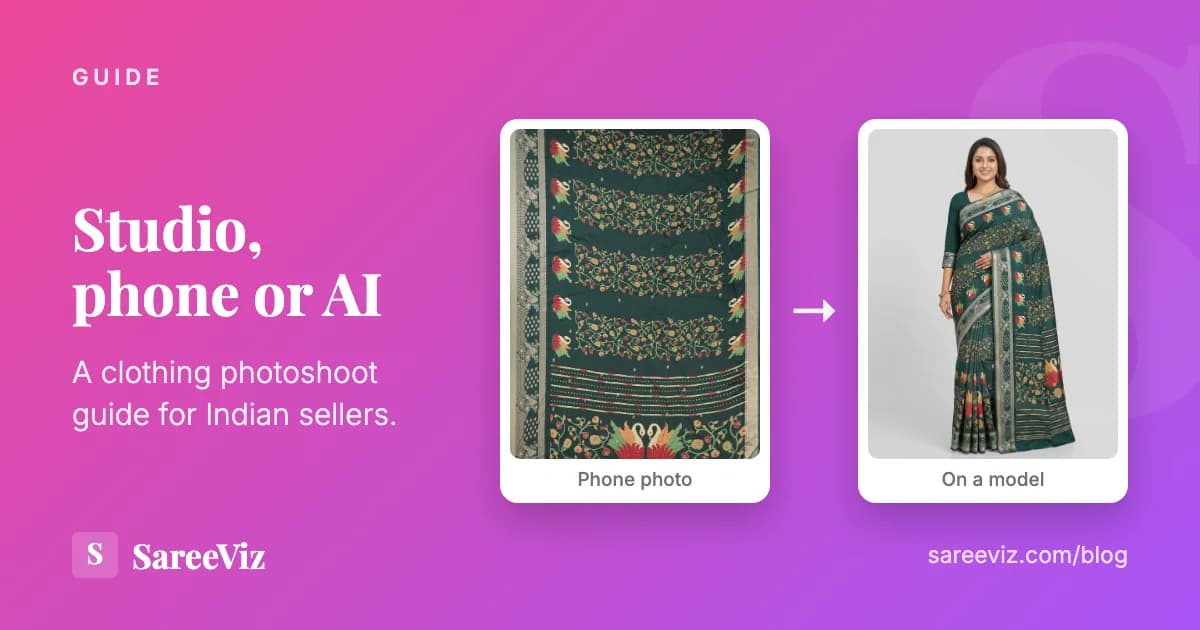
Studio, phone or AI: what a clothing photoshoot involves, what Indian studios charge, a shot list for sarees, kurtis, lehengas and suits, and what Meesho, Amazon, Myntra and Flipkart ask of the photos.

Tri3D publishes no price and we found no independent reviews, so we tested it with a saree photo. Here is what happened, and six alternatives you can price before you pay.

Photoroom is excellent at clean product photos. If what you need is a person wearing the garment, here is where on-model tools differ, and six alternatives with prices checked on their own pages.

One studio charges ₹750 to put a saree on a model and ₹30 for each extra angle. Real Indian rate cards, the costs they leave out, and a 50-design catalogue priced both ways.

We looked at 207,556 catalogue images made by 2,741 Indian sellers. Three in four are sarees, and seven in ten saree images need a blouse uploaded separately.

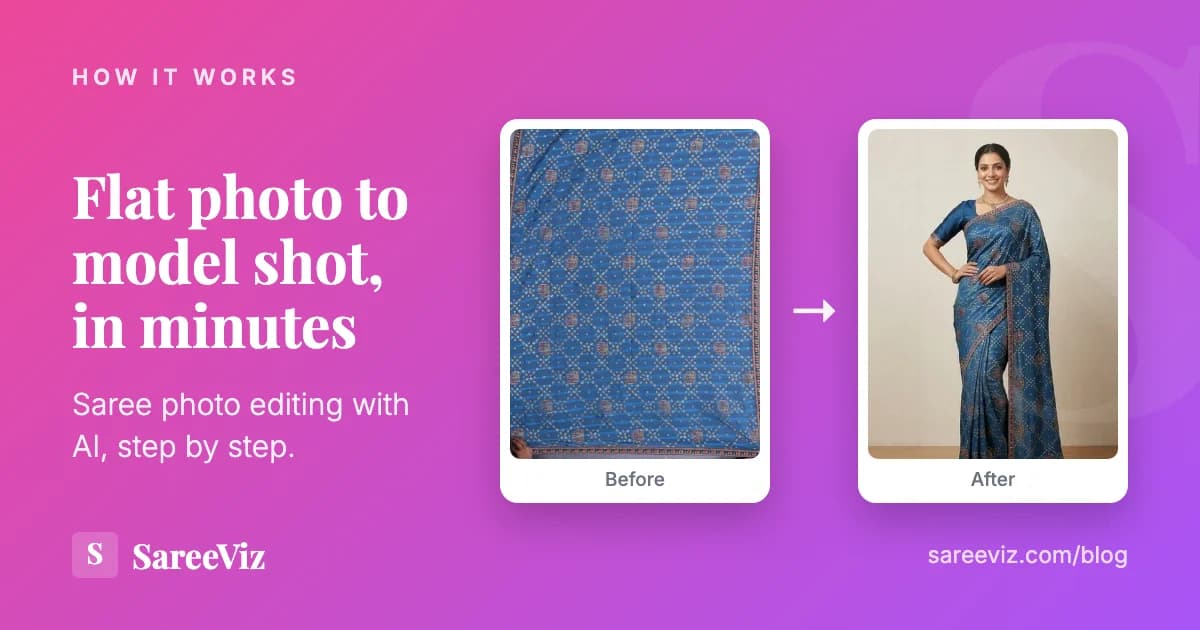
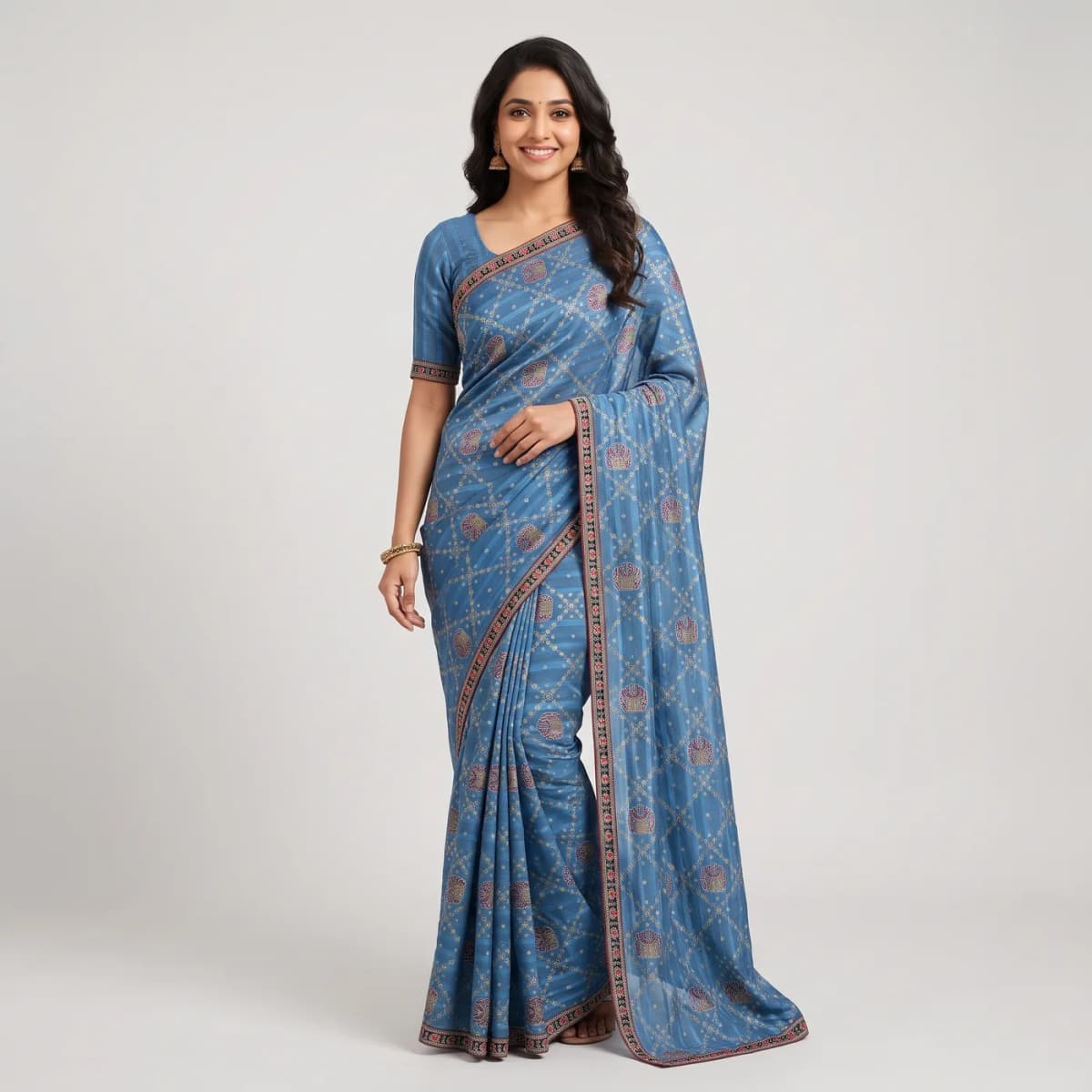
Whether you spell it saree or sadi, the job is the same. Here is how sellers turn a flat saree photo into a model shot in minutes, from ₹9 an image instead of ₹40,000.

India has 80+ documented saree draping styles, and few AI tools let you choose one. Here are the top 9 draping tools, which of them handle regional styles, and what each costs per image.

Replacing expensive model photoshoots with AI-generated model images is now table stakes for fast-growing fashion brands. Here are the top 7 tools tested and ranked.

Every ghost mannequin photo hides a second photo of the inside collar. How the effect is made, what Indian studios charge, the new AI tools, and why Amazon bans it on the main image.

Everything a clothing brand needs to know about AI photoshoots, from input image requirements to marketplace compliance to batch workflows.

A traditional jewelry shoot of 30 to 40 pieces runs ₹17,000 to ₹42,000. AI tools now produce comparable quality from ₹9 per image. Here are the top 6 for Indian jewelry brands.
Try It Free
Upload a flat-lay. Pick a model. Download your image. No subscription, no studio, no waiting.
Start for Free → from ₹9 per image